Root Canal Therapy
Root canals are a common and highly effective procedure used to save teeth that are infected or severely damaged. By removing the infected pulp and sealing the tooth, we can eliminate pain, preserve your natural tooth, and prevent the need for extraction.
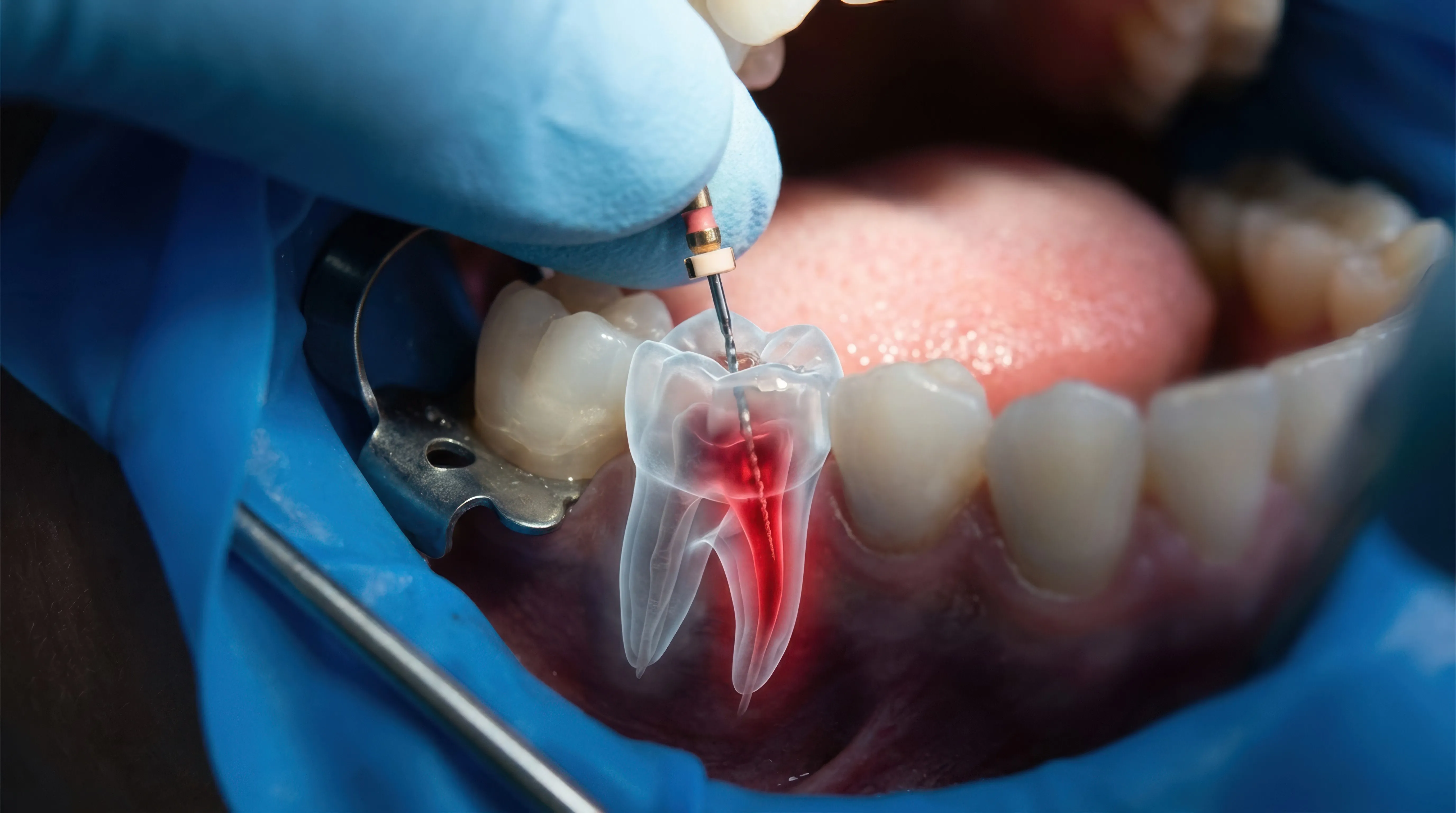
Root Canal Treatment (RCT)
A root canal is needed when the innermost part of the tooth—the pulp—becomes inflamed or infected due to deep decay, trauma, or a cracked tooth. During the procedure, the pulp is removed, the canals are cleaned and disinfected, and the space is filled with a biocompatible material. A crown is usually placed afterward for protection.
Common Signs You May Need a Root Canal:
- Prolonged tooth sensitivity (especially to heat or cold)
- Spontaneous or severe tooth pain
- Swelling or tenderness around the gums
- Discoloration or darkening of the tooth
- Pimple-like swelling near the affected tooth
Our office is equipped with a 3D X-ray (CBCT) machine for better results in complex root canal procedures.
Frequently Asked Questions: Root Canal Treatment
No. Modern techniques and anesthesia make root canals no more uncomfortable than a filling. Many patients experience relief from pain after treatment.
Most root canals are completed in one to two visits, depending on the complexity.
Root canaled teeth are more brittle and are more prone to fracture. Hence, these teeth benefit from a crown to restore both strength and function.
With proper treatment and restoration, root canals have a high success rate. However, if infection returns, retreatment or surgery may be needed.
Apicoectomy (Root-End Surgery)
An apicoectomy is a minor surgical procedure performed when a root canal has not fully resolved an infection or when retreatment isn’t possible. The tip of the tooth root (apex) and the surrounding infected tissue are surgically removed and sealed. This is often the last resort to saving a tooth with a root infection.
When Is an Apicoectomy Needed?
- Persistent infection after root canal therapy
- Blocked or curved canals that can’t be accessed non-surgically
- Fractured root tips or failed retreatments
Procedure Overview:
- Local anesthesia is used
- A small incision is made in the gum near the tooth
- Infected tissue and root tip are removed
- A small filling may be placed to seal the root
- The area is sutured and allowed to heal
Frequently Asked Questions: Apicoectomy
A root canal treats the tooth from the inside. An apicoectomy treats the root from the outside when conventional treatment is not enough.
Initial healing takes 1–2 weeks. Full bone healing can take several months.
Some swelling and discomfort are normal and manageable with prescribed medication. Most patients return to normal activities within a day or two.
Book a root canal consultation
Contact our Richmond office during business hours and we will be happy to help you in English, Cantonese, or Mandarin.